Windrose’s anti-cheat controversy is becoming the biggest crisis in the game’s Early Access era
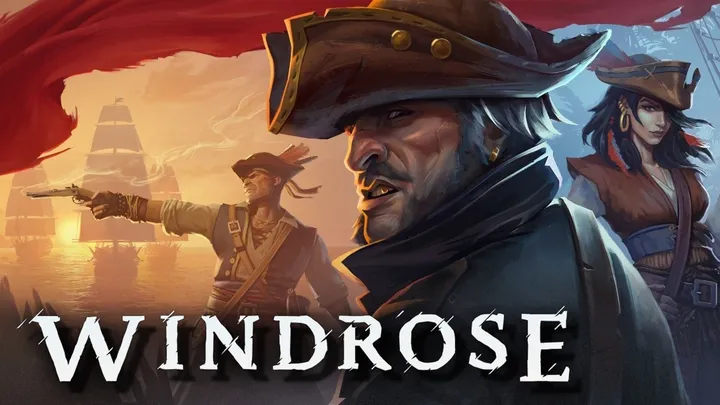
When Windrose launched into Early Access, the pirate survival game immediately looked like one of the breakout multiplayer hits of 2026. Massive ship battles, seamless ocean exploration, island fortresses, and cooperative progression gave players the feeling that the industry had finally found a true successor to the large-scale social survival formula made popular by Valheim and Sea of Thieves. Within days, concurrent player numbers exploded across Steam, Twitch, and YouTube.

But only a few weeks after release, Windrose became trapped in a controversy that shifted community discussion away from gameplay and toward security, privacy, and trust. The game’s anti-cheat system — originally intended to combat hackers destroying public servers — suddenly became the center of one of the most heated debates in the survival genre this year.
What started as scattered complaints about performance degradation and unusual background processes quickly evolved into accusations that Windrose’s anti-cheat software was operating at a kernel level with excessive permissions, causing system instability, crashes, unexplained CPU spikes, and even compatibility conflicts with hardware monitoring tools. The backlash intensified when dataminers and technical users began publishing reports claiming the software remained partially active after the game closed.
The situation created a dangerous split within the community. Competitive players and server administrators argued that strong anti-cheat protection was necessary to stop rampant exploits. Meanwhile, privacy-focused users accused the developers of implementing invasive security technology without proper transparency.
The result was not simply another Steam review bombing incident. The Windrose anti-cheat controversy exposed a growing conflict inside modern multiplayer gaming: how far should developers go to protect online ecosystems before players begin to feel that their own PCs are no longer under their control?
This article explores the entire timeline of the Windrose anti-cheat crisis — from the first technical discoveries to the public response, the developer’s defense, the impact on Steam reviews, and what the controversy may ultimately mean for the future of multiplayer survival games.
Windrose’s explosive launch created enormous pressure on the developers
Windrose entered Early Access with momentum that most indie studios only dream about. Before release, gameplay trailers showcasing naval combat, dynamic weather systems, and large-scale cooperative island building had already generated millions of views across social media.
The game’s launch week exceeded expectations almost immediately.
Within the first several days, Windrose reportedly achieved:
- Over one million copies sold
- More than 200,000 concurrent players
- Top ranking on Steam’s global bestseller chart
- Massive Twitch visibility
- Rapid expansion of unofficial community servers
The problem was that the game’s infrastructure was not fully prepared for this scale.
Server desync began appearing during large naval battles. Duplication exploits spread through Discord communities. Some players discovered methods for spawning duplicated resources, while others found ways to bypass ship damage calculations entirely.
At first, these issues looked like standard Early Access instability. But internally, the development team reportedly became increasingly concerned that cheating could permanently damage the game’s economy and PvP ecosystem before the first major content patch even arrived.
That fear would eventually lead to the decision that triggered the entire crisis.
The first signs of trouble appeared through performance complaints
Initially, players did not realize an anti-cheat issue existed.
The first warning signs came from users reporting strange system behavior after long gameplay sessions. Reddit threads began appearing with titles such as:
- “Why is Windrose using so much CPU while minimized?”
- “Anyone else getting random freezes after the update?”
- “Background process still active after closing the game?”
Many assumed these were normal optimization problems. Early Access games frequently suffer from memory leaks and unstable performance. But technical users soon noticed a recurring pattern.
The reports became increasingly specific:
- CPU spikes even while idle
- Hardware monitoring tools failing to work correctly
- RGB software conflicts
- Fan curve interruptions
- Blue screen crashes on some AMD systems
- Higher SSD activity compared to other survival games
The most alarming discovery came when players began checking active processes after closing Windrose. Some users claimed components associated with the anti-cheat service were still partially active at the system level.
That discovery transformed what looked like a performance issue into a potential security controversy.

Dataminers discovered the anti-cheat operated at kernel level
The controversy escalated dramatically when experienced PC users analyzed the anti-cheat architecture in detail.
According to multiple community investigations, Windrose’s security system appeared to use kernel-level access — a type of software permission that operates extremely deep inside the operating system. Kernel-level anti-cheat is not new. Major games such as Valorant, Fortnite, and Call of Duty already use similar systems.
However, the problem for Windrose was not simply the existence of kernel-level protection. The real issue was transparency.
Players argued that the game’s Steam page and installation process did not clearly explain:
- The level of system access involved
- Background behavior details
- Persistent service architecture
- Potential compatibility risks
- How data collection functioned
Technical users quickly started comparing Windrose’s anti-cheat to Riot Vanguard, the controversial anti-cheat system used by Valorant.
The difference was that Riot Games had spent years publicly explaining how Vanguard worked, while Windrose’s small development team had almost no communication strategy prepared for this type of scrutiny.
That communication vacuum allowed speculation to spread rapidly.
The community became divided between competitive fairness and privacy concerns
One of the most interesting aspects of the Windrose controversy was how sharply the player base split into opposing camps.
Competitive PvP players largely defended the anti-cheat implementation.
For these users, cheating represented a far greater threat than aggressive security software. Public servers had already experienced teleport hacks, infinite resource exploits, and invulnerability glitches. Some server owners claimed entire communities were collapsing because of coordinated cheater attacks.
Their argument was simple:
“If the anti-cheat is weak, the game dies.”
These players pointed to other survival games where rampant hacking permanently destroyed public PvP ecosystems.
But another portion of the community saw the issue very differently.
Privacy-focused players argued that no indie game should require deep kernel-level access simply to protect multiplayer balance. Many users felt uncomfortable granting such permissions to a relatively unknown studio without a long-term security reputation.
The debate intensified because both sides had valid concerns.
Steam reviews collapsed as negative feedback spread across social media
The situation became much more serious once major content creators began discussing the issue publicly.
Several YouTube channels specializing in PC hardware and gaming security published breakdown videos explaining kernel-level anti-cheat systems. While some videos remained balanced, others used dramatic language that intensified player fear.
Common claims circulating online included:
- “Windrose installs spyware”
- “The anti-cheat watches your entire PC”
- “The game never fully closes”
- “This software can damage your system”
Some of these accusations were exaggerated or technically misleading, but the damage had already begun.
Steam reviews rapidly shifted from “Very Positive” toward “Mixed.”
Negative reviews increasingly focused not on gameplay quality but on trust issues:
- Lack of transparency
- Fear of security vulnerabilities
- System instability
- Excessive permissions
- Poor communication from developers
The controversy also spread beyond Steam into broader PC gaming communities where many users had never even played Windrose.
At that point, the issue had evolved into a reputation crisis rather than a purely technical one.
The developers responded too slowly during the most critical period
One of the biggest criticisms directed at the Windrose studio involved communication timing.
For nearly 48 hours after the controversy exploded, the developers remained mostly silent except for brief moderation messages on Discord. During that silence, speculation expanded uncontrollably.
Players interpreted the lack of immediate clarification as suspicious behavior.
When the studio finally released an official statement, the response was mixed.
The developers confirmed:
- The anti-cheat did operate at kernel level
- It was implemented to combat severe cheating problems
- The software was not intended to collect personal data
- Certain background services could remain temporarily active
- Compatibility fixes were already being developed
However, many players felt the explanation lacked technical detail.
Instead of calming the situation, the statement unintentionally raised additional questions:
- Why was kernel-level access necessary so early in Early Access?
- Why was this not clearly disclosed before installation?
- What third-party security vendor was involved?
- Why were hardware conflicts appearing?
The developers now faced a difficult reality: even if the software itself was technically safe, player trust had already been damaged.
Technical experts disagreed on how dangerous the anti-cheat actually was
An important aspect often ignored during the controversy was that experts themselves did not fully agree.
Some cybersecurity analysts argued that the panic surrounding Windrose became heavily exaggerated. They pointed out that kernel-level anti-cheat systems already exist in many major multiplayer games and are not automatically malicious.
According to this perspective, the real problem was poor communication rather than spyware-like behavior.
These experts argued:
- Kernel access alone is not evidence of malware
- Persistent services are common in modern anti-cheat systems
- Most crashes were likely compatibility issues
- Social media amplified technical misunderstandings
However, other analysts warned that players still had legitimate concerns.
Their argument focused on risk concentration.
Kernel-level software creates powerful access pathways inside an operating system. Even if a developer has good intentions, vulnerabilities inside such software can become major security targets.
This means the controversy was not entirely irrational.
The debate therefore shifted away from “Is Windrose malware?” toward a broader discussion:
“How much system access should games be allowed to have?”
The controversy exposed a larger problem inside modern multiplayer gaming
The Windrose situation became significant because it represented something bigger than one game.
Over the last decade, multiplayer gaming has entered an escalating arms race between developers and cheaters.
Modern cheat creators now use:
- AI-assisted aim systems
- Hardware spoofing
- DMA attacks
- External memory readers
- Kernel-level bypass tools
As cheating technology evolved, anti-cheat systems also became increasingly invasive.
The problem is that ordinary players are now caught between two undesirable outcomes:
- Weak anti-cheat allows cheating epidemics
- Aggressive anti-cheat creates privacy and security concerns
Windrose accidentally became the latest battleground in that larger industry conflict.
Many players began questioning whether the survival genre itself is particularly vulnerable because of its dependence on persistent shared worlds. In these games, cheating does not merely affect one match — it can permanently destroy hundreds of hours of progression.
That reality pushes developers toward stronger security measures.
But stronger security inevitably increases concerns about user control and privacy.
Server owners and hardcore communities still supported the system
Interestingly, some of Windrose’s most dedicated players continued defending the anti-cheat despite the backlash.
Large community server administrators argued that cheating had already become catastrophic before the anti-cheat update arrived.
According to these groups, hackers were:
- Instantly sinking ships
- Duplicating rare materials
- Destroying economy systems
- Crashing servers intentionally
- Using teleport exploits in PvP wars
Some server owners claimed they were close to shutting down entirely because moderation tools were insufficient.
After the anti-cheat update, many reported dramatic reductions in exploit activity.
This created a major perception divide between casual players and competitive communities.
Casual players mainly experienced:
- Privacy concerns
- Performance problems
- System instability fears
Meanwhile, hardcore PvP groups experienced:
- Improved server stability
- Fewer exploit attacks
- Better competitive integrity
As a result, the Windrose community became increasingly fragmented.
The developers eventually introduced optional security modes
Facing mounting backlash, the Windrose team eventually implemented a compromise solution several weeks later.
The studio announced plans for separate server security tiers:
- Official competitive servers with full anti-cheat
- Community servers with customizable protection
- Limited “trusted mode” options
- Expanded transparency documentation
This decision helped calm portions of the community.
Players who prioritized security could remain on official servers, while users uncomfortable with kernel-level access gained alternative options.
The developers also promised:
- Public technical documentation
- Faster patch communication
- Independent security audits
- Reduced background activity
- Improved uninstall behavior
While the controversy did not disappear completely, the situation gradually stabilized.
However, the damage to public perception remained significant.
For many players, first impressions had already hardened.
Windrose may recover, but the controversy will follow the game for years
The most important long-term question is whether Windrose can fully escape the reputation damage caused by the anti-cheat crisis.
Historically, major multiplayer games have recovered from severe controversies before. Titles such as No Man’s Sky, Cyberpunk 2077, and Final Fantasy XIV all experienced catastrophic public backlash at different points before rebuilding trust.
But anti-cheat controversies are uniquely difficult because they involve something deeply personal: player control over their own machines.
Gameplay bugs can be patched.
Balance issues can be adjusted.
But once players begin distrusting what software is doing in the background, rebuilding confidence becomes far more complicated.
Windrose now faces a difficult balancing act moving forward:
- Maintain strong anti-cheat protection
- Preserve player trust
- Improve transparency
- Reduce technical instability
- Avoid future communication failures
Whether the game succeeds may depend less on content updates and more on how intelligently the studio handles transparency from this point onward.
Conclusion
The Windrose anti-cheat controversy became one of the defining gaming debates of 2026 not because it involved simple bugs or balancing issues, but because it touched a much deeper anxiety inside modern PC gaming.
Players increasingly want secure multiplayer environments free from cheaters, yet they also want transparency, privacy, and confidence that games are not overstepping system boundaries. Windrose found itself trapped directly between those two expectations.
The developers likely never anticipated that anti-cheat implementation would overshadow the actual game itself. Yet the controversy demonstrated how fragile trust can become during the Early Access era, especially when communication fails during the first critical days of a crisis.
Ironically, Windrose remains a genuinely ambitious and potentially genre-defining survival game. Its naval combat, exploration systems, and large-scale social gameplay still attract a massive audience. But the anti-cheat debate permanently changed how many players view the project.
Instead of discussing only ships, raids, and exploration, the community is now also discussing cybersecurity, kernel access, privacy, and digital trust.
And that may ultimately become the real legacy of the Windrose controversy.