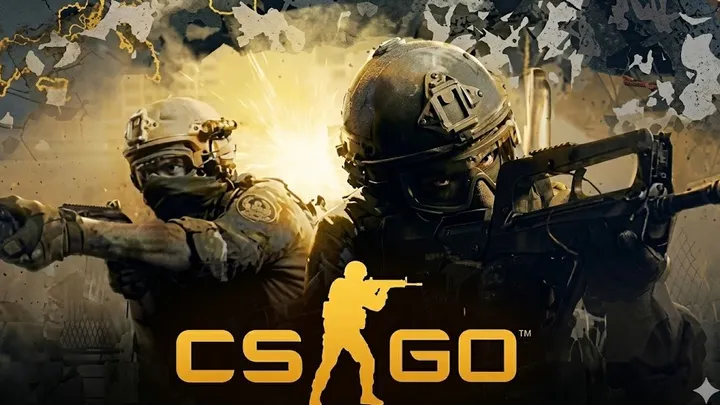

Few titles in the history of interactive entertainment have left as permanent a mark as Counter-Strike: Global Offensive. Known universally to millions of dedicated PC gamers around the planet as CS GO, this tactical masterpiece fundamentally redefined the competitive first-person shooter genre. From its modest origins as a community-driven multiplayer modification to its status as a billion-dollar tier-one esport, the game established a standard of perfection in mechanical design, economic execution, and tactical depth. Over its storied decade-long tenure, the shooter fostered a vibrant global community, built a revolutionary digital item economy, and hosted historical arena-filling international competitions. This comprehensive exploration charts the fascinating evolution of the game, exploring its chronological updates, mechanical innovations, competitive milestones, and its eventual modern transition into its official successor, Counter-Strike 2.
The Pre-Launch Era and Mechanical Foundations (1999–2011)
To fully grasp the historic impact of CS GO, one must examine the foundational legacy established by its direct predecessors. The franchise began in 1999 as a passionate community modification for Valve's sci-fi shooter Half-Life, conceptualized by developers Minh Le and Jess Cliffe. This early project completely subverted the futuristic, high-mobility arena shooters of the late 1990s by implementing strict, round-based tactical simulation principles. Instead of infinitely respawning and managing powerups, players were separated into two distinct tactical teams: Terrorists and Counter-Terrorists. This pioneering blueprint emphasized methodical positioning, communication, precise cursor tracking, and a unique in-game purchasing system that rewarded successful round objectives with virtual currency.
The overwhelming community success of this modification quickly caught the attention of Valve, who purchased the intellectual property rights and released it as a standalone commercial title in 2000. As the franchise expanded through seminal iterations like Counter-Strike 1.6 and Counter-Strike: Source, the community fractured across differing game engines and mechanical preferences. Competitive purists strictly favored the flawless movement dynamics and predictable shooting physics of version 1.6, while casual audiences leaned heavily toward the visual fidelity of the Source engine. Realizing the urgent need to unify this heavily divided player base under a singular modern platform, Valve collaborated with Hidden Path Entertainment in the year 2011 to actively develop a cross-platform tactical experience capable of spearheading the next generation of competitive gaming.
The Critical Launch and Early Adoption Hurdles (2012)
On August 21, 2012, Valve officially published CS GO to global audiences, targeting the PC, Mac, PlayStation 3, and Xbox 360 platforms. Despite the massive hype surrounding its arrival, the initial reception from veteran tactical players was intensely critical. The early launch builds suffered from severe mechanical issues, including sluggish player acceleration, highly unpredictable weapon recoil patterns, visual clutter on classic maps, and clunky user interface elements. Many competitive professionals openly rejected the title, opting to remain with older versions of the franchise rather than migrating to what was widely perceived as a console-oriented shooter.
Valve’s developer team quickly realized that rescuing their tactical shooter required abandoning the console ecosystem to focus exclusively on iterative, community-driven PC updates. Developers worked around the clock to completely overhaul raw input processing, fine-tune weapon physics, and reconstruct competitive maps like de_dust2 and de_inferno for better visibility. The introduction of an integrated, automated matchmaking system drastically simplified the competitive experience, allowing casual players to bypass convoluted community server browsers and enjoy structured 5v5 competition with a standardized ranked ladder. These crucial early updates steadied the player base, setting the stage for one of the greatest redemption arcs in video game history.
The Arms Deal Update and Economic Revolution (2013)
If there is a singular, definitive turning point that permanently transformed the trajectory of CS GO, it is undoubtedly the legendary Arms Deal Update released on August 14, 2013. This massive update completely revolutionized the game by introducing cosmetic weapon skins, decorative finishes that altered a weapon's aesthetic without changing its mechanical performance. Players could now earn randomized virtual cases through gameplay, which required purchasing a real-world digital key from Valve to unlock. This brilliant implementation utilized the underlying Steam Community Market infrastructure, allowing players to buy, sell, and trade their cosmetics openly with real currency value.
The introduction of the skin economy fundamentally altered the global gaming landscape. Rare items, such as the iconic AWP | Dragon Lore or case-hardened knives with unique pattern indexes, rapidly transformed into high-value digital commodities, with some pristine items commanding thousands of real-world dollars. This vibrant virtual marketplace drove unparalleled player engagement, turning case openings into highly popular entertainment content on streaming platforms and attracting an entirely new demographic of casual collectors. The immense revenue generated from these transaction systems allowed Valve to reinvest millions directly back into the professional competitive ecosystem, forever changing the financial realities of professional esports organizations.
The Mechanics of Cosmetic Rarity
- Consumer Grade (Common) – Light blue items commonly found as post-match drops.
- Industrial Grade (Uncommon) – Light purple items featuring basic patterns.
- Mil-Spec Grade (Rare) – Dark blue items representing standard case entries.
- Restricted (Mythical) – Purple items with significantly detailed custom artwork.
- Classified (Legendary) – Pink weapon skins possessing intricate, stylized designs.
- Covert (Ancient) – Red weapon skins, representing the absolute pinnacle of item rarity.
- Special Items (Exceedingly Rare) – Exceptionally elusive gold drops consisting of Knives and Gloves.
The Birth of the Majors and Esport Mainstream (2014–2015)
With a rapidly booming player base and a highly lucrative microtransaction framework in place, the competitive scene grew exponentially. Late 2013 hosted the first-ever officially sponsored Major Championship at DreamHack Winter, featuring a crowd-funded $250,000 prize pool that completely stunned the industry. By 2014 and 2015, these official Major tournaments grew into massive, international digital festivals. Legendary esports organizations like Ninjas in Pyjamas, Fnatic, and Virtus.pro established fierce, historic rivalries that drew hundreds of thousands of concurrent viewers to early live-streaming platforms like Twitch.
During this golden era of growth, Valve consistently refined tournament integration by introducing in-game spectator tools and collectible Team Sticker items. These virtual stickers allowed enthusiastic fans to directly support their favorite professional organizations and players, with a significant portion of all sales revenue funneling straight into the teams' pockets. The competitive meta matured rapidly as coaches, analysts, and analytical players developed incredibly intricate strategic executions, precise smoke grenade lineups, and masterful physical economy management, cementing the game's position as a premier, high-skill tier-one esport globally.
Gameplay Mechanics, Gunplay, and Strategic Depth
The enduring longevity of CS GO rests firmly upon its perfectly balanced, high-skill-ceiling mechanical framework. Unlike casual arcade shooters that feature highly forgiving movement mechanics or automated aim-assist protocols, this tactical masterpiece demands flawless mechanical coordination, lightning-fast reflexes, and profound spatial awareness. Every individual weapon in the expansive armory possesses a completely unique, non-random spray pattern that dictates exactly how bullets travel during sustained automatic fire. To achieve perfect accuracy, a player must master complex recoil compensation techniques, physically pulling their mouse in the precise inverse path of the weapon's physical recoil pattern.
Key Mechanical Concepts of Competitive Play
Counter-Strafing
Movement and firing accuracy are deeply intertwined within the underlying Source engine physics. Firing a rifle while walking or running introduces extreme velocity-based accuracy penalties, rendering shots highly erratic. To mitigate this penalty, top-tier players utilize a movement technique known as counter-strafing. When moving in a specific direction, a player must rapidly tap the opposing directional key to bring their character's physical velocity to an immediate, absolute standstill, providing a split-second window of perfect accuracy for lethal headshots.
Map Control and Economic Utility
High-level tactical competition goes far beyond simple aiming mechanics; it is an intricate game of geometric map control and resource management. Rounds are fundamentally manipulated through the strategic deployment of utility items, including high-explosive charges, flashbangs, smoke grenades, and incendiary devices. Teams must coordinate precise tactical lineups to block enemy sightlines, blind aggressive defenders, or flush out deeply entrenched opponents from crucial defensive chokepoints across the map layout.
The In-Game Purchase Economy
The unique round-based monetary system creates an overarching layer of strategic depth that forces teams to constantly manage their collective financial resources. Players must continuously adapt their equipment purchasing strategies based on their current bank accounts, predicting their opponent's financial state to maximize victory probabilities. This complex system divides rounds into several distinct strategic categories:
- Eco Round (Average Team Budget: $0 - $1,500): Minimal spending; save money to buy full equipment in the following round.
- Force Buy (Average Team Budget: $2,000 - $3,000): Spend all available funds on low-tier SMGs or heavy pistols to catch enemies off guard.
- Full Buy (Average Team Budget: $4,500+): Purchase premium assault rifles (AK-47/M4A4), body armor, and a full suite of tactical utility.
Chronological Operations and Metagame Shifts (2016–2018)
To keep the tactical experience fresh over years of continuous play, Valve utilized periodic thematic content updates known formally as Operations. Content drops like Operation Wildfire in 2016 and Operation Hydra in 2017 introduced engaging cooperative campaign missions, wacky experimental casual game variants, and beautifully designed community-created maps to the core client. These operations acted as vital testing grounds for experimental gameplay concepts, allowing developers to safely gather massive amounts of telemetry and user feedback before implementing permanent structural changes to the competitive map pools.
Simultaneously, this specific era witnessed massive foundational overhauls to the game's audio systems and overall visual design. Valve completely re-recorded every weapon audio profile to provide hyper-accurate directional sound cues, allowing skilled players to identify an opponent's exact physical location solely through footsteps or distant reloads. Major weapon balancing passes occurred during this period as well, famously shifting the competitive meta back and forth between traditional assault rifles and highly specialized scoped rifles. This forced professional teams to constantly redefine their tactical approaches to adapt to the evolving environment.
The Free-to-Play Transition and Danger Zone (2018)
In December 2018, Valve executed one of the most daring strategic moves in the history of the franchise by permanently transitioning CS GO into a completely free-to-play model on Steam. To ease the valid concerns of the existing premium player base regarding a potential influx of cheaters and bad actors, Valve introduced Prime Status. Existing accounts were automatically upgraded to Prime, creating an exclusive, verified matchmaking pool that required phone number verification and consistent account progression, isolating high-integrity veterans from completely unverified new profiles.
Alongside this structural free-to-play shift, Valve capitalized on contemporary industry trends by introducing Danger Zone, an innovative, fast-paced take on the wildly popular battle royale genre. Tailored specifically around the precise gunplay mechanics and physics of the Counter-Strike engine, Danger Zone dropped small groups of players onto compact, highly dangerous maps. Players had to rapidly scavenge for cash, buy equipment drops via personal delivery drones, and systematically eliminate opposing squads while avoiding a constantly encroaching toxic zone. This addition proved that the classic tactical engine was surprisingly versatile, offering an enjoyable, casual diversion from the high-stress nature of the main competitive matchmaking mode.
The Modern Operations and Character Agents Era (2019–2021)
As the game entered its twilight years on the aging Source engine, Valve unleashed a series of groundbreaking updates that completely revolutionized custom player aesthetics. November 2019 saw the arrival of Operation Shattered Web, which introduced customizable character models known as Agents. For the very first time in franchise history, players could break away from static, map-dependent team models and equip distinct, uniquely voiced characters across any competitive map. While this initially caused minor visibility concerns among esports purists, Valve quickly deployed rapid visual updates to ensure competitive integrity remained completely uncompromised.
Late-Stage Operations and Core Additions
- Operation Shattered Web (2019) – Introduced unique character Agents, end-of-match accolades, and brand-new weapon collections.
- Operation Broken Fang (2020) – Added the competitive Premier Mode matchmaking system, detailed in-game statistics tracking, and the Retakes game mode.
- Operation Riptide (2021) – Introduced customizable shorter competitive match variants (9-round halves), drop-able grenades, and massive weapon balance adjustments.
Subsequent updates like Operation Broken Fang in 2020 and Operation Riptide in 2021 introduced highly requested structural changes to the competitive ecosystem. The launch of the Premier Matchmaking framework implemented an intuitive pick-and-ban map phase directly into the game client, closely mirroring the professional tournament experience. Furthermore, the revolutionary ability to physically drop grenades for teammates opened up an entirely new dimension of tactical strategy, allowing elaborate utility executions that were mechanically impossible in previous iterations of the game.
The Cultural Phenomenon and Global Esports Dominion (2022)
By the year 2022, celebrating its momentous tenth anniversary, CS GO had grown far beyond a standard video game to become an absolute titan of global digital culture. The game consistently shattered its own concurrent player records on Steam, routinely hosting over one million active players simultaneously. It served as a major cultural touchstone across Europe, the Americas, and Asia, cementing a multi-generational legacy where veteran players who competed in the early 2000s were now sharing their passion with their own children.
The elite competitive scene had reached unparalleled levels of prestige and production value. Massive international tournament organizers like ESL, PGL, and BLAST regularly filled iconic global arenas—such as the Lanxess Arena in Cologne or the Avicii Arena in Stockholm—with tens of thousands of screaming fans. Professional players transformed into genuine mainstream sports icons within their home countries, backed by massive corporate sponsorships and dedicated global fanbases. The game had achieved an unmatched level of competitive purity, where victory was decided solely by mechanical skill, tactical intelligence, and mental resilience, making it a highly compelling spectator sport on the planet.
The Dawn of Counter-Strike 2 and the Source 2 Transition (2023–2026)
After years of community speculation, Valve officially unveiled the next evolutionary chapter of tactical shooters: Counter-Strike 2. Released on September 27, 2023, this massive upgrade completely replaced the legacy installation on Steam, seamlessly migrating the game over to the cutting-edge Source 2 engine. This transition was a true technical revolution, modernizing the game's core architecture while preserving the entire multi-billion-dollar skin economy that players had built over a decade of dedication.
Technological Advancements in Counter-Strike 2
Sub-Tick Server Architecture
The traditional 64-tick or 128-tick server refresh systems of the legacy client were completely retired in favor of a brand-new, sub-tick server architecture. This advanced system calculates a player's exact actions—such as the precise millisecond a shot is fired or a movement key is pressed—completely independent of the overarching server refresh rate. This ensures that shooting mechanics and physics feel perfectly responsive and consistent across all gameplay environments.
Volumetric and Fully Dynamic Smoke Grenades
One of the most visually stunning advancements in the new engine is the implementation of fully volumetric, dynamic smoke particles. Unlike the static, pre-rendered smoke clouds of the old engine, modern smoke exists as a genuine three-dimensional physical object within the map space. It reacts realistically to lighting, expands naturally to fill tight architectural corridors, and interacts dynamically with gameplay mechanics. Players can now carve temporary lines of sight through smoke clouds using high-explosive grenades or well-placed rifle fire, completely redefining modern tactical strategy.
Conclusion
The legendary journey of CS GO stands as a definitive monument to the sheer power of masterful game design and dedicated, long-term community development. Over its highly impactful decade of dominance, the shooter successfully unified a heavily divided community, pioneered a revolutionary virtual item economy that reshaped global commerce, and established the definitive standard for modern professional esports. While the classic software application has gracefully stepped aside to make way for the technologically superior engine of Counter-Strike 2, its foundational mechanics, iconic maps, and vibrant competitive culture live on entirely unchanged. The unmatched legacy of this tactical masterpiece is permanently etched into the history of interactive entertainment, and its classic principles will undoubtedly continue to guide competitive first-person shooters for decades to come.