.webp)
Monolithic Level Design, Dynamic Difficulty Adjustment, and the Monetization of Frustration in DuneCrawl
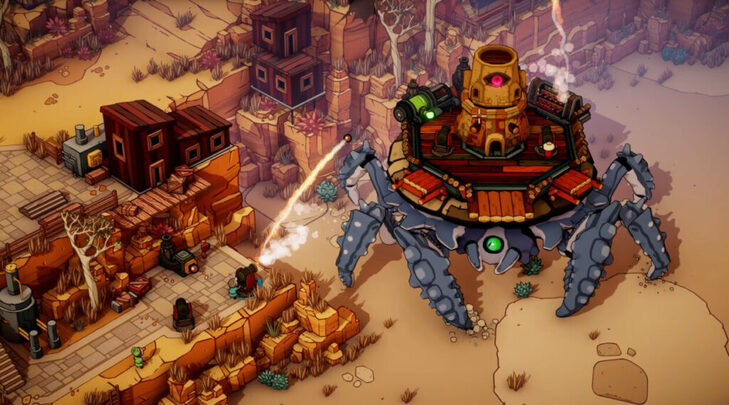
When developer teams launched DuneCrawl on mobile platforms, few industry analysts predicted that a desert-themed crawling puzzle title would fundamentally reshape the financial, technological, and behavioral landscape of the casual gaming market. Over time, the franchise has solidified its status as a massive mobile property, generating immense revenue across tens of thousands of distinct, continuously updated levels. However, beneath its vibrant desert aesthetics, sand-yellow color palettes, immersive atmospheric soundtrack, and crisp crawling sound effects lies one of the most sophisticated systems of algorithmic behavioral manipulation ever deployed within consumer software. This article provides an exhaustive examination into the central operational crisis within DuneCrawl: the deliberate transition from genuine skill-based desert traversal design to an opacity-driven software model governed by Dynamic Difficulty Adjustment, artificial paywalls, behavioral psychology, user experience dark patterns, and automated retention loops engineered specifically to monetize human impatience, temporal delay, and cognitive fatigue.
To understand the profound impact of DuneCrawl, one must look beyond its surface identity as a whimsical puzzle game and analyze it as a masterclass in micro-friction monetization. The game established a framework wherein traditional player agency—the ability to master grid clearance through tactical path planning, obstacle avoidance, and spatial reasoning—was systematically replaced by server-controlled probability engines. Rather than selling simple content expansions or cosmetic crawler skins, the developers pioneered the art of monetizing relief from artificially created frustration. By studying the precise intersection of cognitive neuroscience, real-time data telemetry, and interface design within the game, we reveal a broader transformation in free-to-play mobile media: the shift from software designed for player entertainment to software engineered for human behavioral extraction.
The Dawn of Modern Freemium: How DuneCrawl Redefined Casual Mobile Gaming
Before DuneCrawl revolutionized casual mobile ecosystems, grid traversal and puzzle games operated primarily under traditional single-purchase premium models or simple ad-supported distribution frameworks. Legacy movement puzzle games rewarded long-term spatial awareness, timing, and mechanical execution by offering predictable grid layouts governed purely by standard mathematical randomness. In those legacy architectures, every player operated on a level playing field where board states were generated without prejudice, and a player's win rate directly reflected their mechanical proficiency and strategic execution. When DuneCrawl debuted on mobile operating systems, it introduced a structural paradigm shift that permanently altered the casual gaming landscape by combining core sand-crawling and tile-matching mechanics with an endless map-based saga progression system, an aggressive live-service operational pipeline, and a strictly enforced energy economy.
By removing upfront monetary purchase prices and replacing them with targeted microtransactions for extra lives, consumable sand-spades, path extenders, and late-stage move refills, the game established the definitive blueprint for modern free-to-play mobile software architecture. This transition fundamentally decoupled a player’s progress from pure player proficiency, establishing a precedent where continuous success could be throttled, delayed, or purchased outright. Consequently, casual gaming transformed from a passive skill-building pastime into an active, data-driven software service engineered around persistent user retention, real-time telemetry tracking, and systematic behavioral revenue extraction. The studio proved to the broader technology sector that an endless stream of micro-transactions triggered by emotional touchpoints was vastly more lucrative than any single upfront software sale.
This structural evolution reshaped how game developers approached puzzle design at large. Rather than designing levels with fixed, deterministic solutions that could be mastered through repeated practice, developers realized that variable outcomes controlled by server-side algorithms offered far greater financial returns. By turning level design into a fluid and adaptive variable, DuneCrawl proved that casual players were willing to accept financial micro-transactions in exchange for relieving artificial friction, setting off an industry-wide pivot toward monetized engagement design. Game balance shifted from an artistic discipline aimed at creating satisfying intellectual challenges to a data science discipline dedicated to maximizing average revenue per user while minimizing absolute player churn.
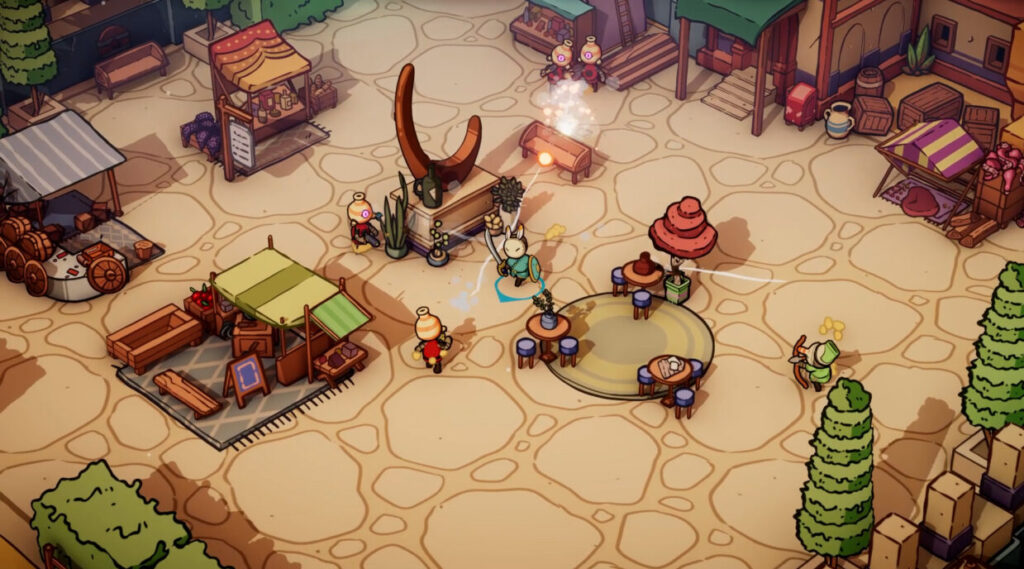
The Psychology of the Grid: Traversal Mechanics and Dopamine Loops
At its foundational level, DuneCrawl leverages fundamental principles of perceptual psychology, visual chunking, and variable reward reinforcement schedules to captivate the human brain. The core gameplay interaction—guiding the crawler across clustered desert tiles to trigger satisfying path clearances—is inherently satisfying to human cognitive architecture, which is naturally wired to seek spatial symmetry, pattern completion, and dramatic environmental clearance. When a player completes a difficult path, the immediate visual resolution of the board satisfies a basic neurological drive to resolve chaotic clutter into structure. The developers amplified this baseline satisfaction by layering high-potency multi-sensory visual and auditory feedback onto every single successful interaction on the grid, transforming routine tile management into a continuous, hyper-stimulating sensory reward system.
When special crawler power-ups trigger multi-tiered cascading sand-slides, the application triggers intense sensory confirmation signals: resonant deep voiceovers proclaiming DUNE SHIFT, UNTHARTHED, or DESERT BLAZE, explosive sand-particle bursts, screen-shaking camera animations, and satisfying tactile haptics. These multi-sensory feedback cues function as classical conditioning mechanisms, delivering sharp and unexpected surges of neurochemical reward. Because sand cascades are frequently driven by falling tiles originating from off-screen positions beyond the player's immediate calculation, winning turns feel both personally engineered and serendipitously miraculous, reinforcing the psychological drive to initiate another turn regardless of previous failure streaks. The brain misattributes the random success of automated cascades to its own tactical brilliant play, fueling an ego-rewarding feedback loop that masks the underlying mathematical manipulation.
Furthermore, the visual representation of the board relies on deeply embedded psychological associations with desert exploration, hidden treasure, and high-energy rewards. Bright and glistening dune visuals tap into primal neurological pathways associated with discovery and pleasure, lowering natural psychological resistance to prolonged play sessions. Over hours of continuous engagement, players develop automatic motor habits and immediate visual scanning patterns, entering a near-hypnotic flow state where time awareness diminishes entirely. This subtle cognitive entrainment lays the groundwork for the game's more predatory algorithmic adjustments, as players operating in this semi-trance state become remarkably vulnerable to sudden spikes in mechanical friction and impulsive spending cues.
The sensory conditioning stack incorporates three main elements to maximize player absorption. Acoustic amplification provides bass-heavy, sand-rumbling auditory chimes calibrated specifically to hit frequencies that trigger heightened focus and pleasure responses. Visual particle density delivers multi-layered desert dust and golden particle effects scaled exponentially with the number of tiles cleared in a single movement. Somatic feedback offers micro-vibrations delivered through the device hardware during high-combo chain reactions to physically anchor the digital reward.
The deliberate combination of warm sand-yellow color schemes, rhythmic acoustic confirmations, and variable cascade explosions directly mirrors the sensory architecture of modern slot machines, systematically training players to associate board clears with high-potency neurological dopamine loops.
The Illusion of Skill: Algorithmic RNG and Dynamic Difficulty Adjustment
While the initial tutorial stages and early oasis map regions instill the belief that tactical foresight, spatial analysis, and step conservation dictate ultimate success, higher-tier stages rely heavily on hidden algorithmic systems known as Dynamic Difficulty Adjustment. In a purely skill-based puzzle environment, initial board configurations and subsequent tile drop queues are derived from transparent and static probability distributions. In DuneCrawl, however, board seed generation, hazard distribution, and cascade behavior are dynamically modified behind the scenes to strictly control player win-loss ratios, control content pacing, and maximize long-term user Lifetime Value.
Through real-time telemetry systems, backend servers track comprehensive user metrics, including total session duration, historical spending habits, average win frequency, churn risk indicators, and individual tilt thresholds. When the system identifies a player approaching a designated Quicksand chokepoint level, the game’s underlying algorithm can intentionally suppress the spawn rates of necessary path-matching tiles or obstacle-clearing opportunities. This mechanical suppression makes an unassisted, unpaid victory statistically improbable over dozens of consecutive attempts, regardless of how optimally the player executes their moves. The game effectively shifts from a crawling puzzle to a digital tollbooth, waiting for either financial payment or prolonged temporal wear-down.
Conversely, after a player experiences an extended series of failures that triggers elevated churn metrics—or when a player returns after days of inactivity—the system dynamically adjusts tile dropping probabilities in the opposite direction. The algorithm delivers an extraordinarily generous, pre-calculated board seed that practically solves itself through automated sand-slides, granting an effortless victory that restores player confidence, triggers a massive neurochemical high, and re-engages the primary gameplay loop. Through this mechanism, success becomes a moving target controlled by engagement math rather than pure player intelligence, turning the board into an illusion where human agency is secondary to server-side telemetry.
The mechanics of board manipulation manifest through several specialized sub-systems. Weighted tile spawns dynamically adjust the spawn frequencies of specific desert tile types mid-game to block or force the creation of Mega-Spades, Dune-Busters, or Oasis-Bombs based on real-time board states and player spend history. Traversal cascade throttling directs gravity-fed piece falls into dead zones or unproductive grid columns to intentionally minimize chain-reaction clears when the backend system dictates a forced level failure. Deterministic board seeds generate initial grid layouts with fixed opening move options that force the player into sub-optimal starting trades right from move one, effectively ruining the run before it begins. Tile pool inflation dynamically increases the active hazard variety on a board mid-level, mathematically dropping the probability of natural path clearing by orders of magnitude.
The Economics of Frustration: Monetizing Artificial Chokepoints
The monetization framework of DuneCrawl operates on a carefully calculated emotional axis known in game design literature as the frustration economy. Unlike traditional video games that monetize cosmetic alterations, character skins, or expansive narrative expansions, the game monetizes the immediate removal of self-inflicted psychological friction, emotional irritation, and temporal delays. By engineering levels that routinely fail players within one or two single moves or seconds of achieving complete objective clearance, the software creates an acute, highly localized state of near-miss psychological bias.
When a player invests ten minutes of concentrated focus navigating a complex multi-stage desert grid, only to exhaust their movement allowance with a single buried artifact or stubborn rock barrier remaining, the cognitive impulse for psychological closure reaches its maximum intensity. The human brain naturally experiences a form of cognitive dissonance when a structured task is left tantalizingly close to completion. At this precise emotional nexus, the user interface presents a prominent glowing purchase prompt offering five additional moves or a Sand-Drill in exchange for premium Sun Gems. By positioning this financial transaction as a trivial fee to preserve the substantial emotional labor and time already expended, the software effectively exploits the sunk cost fallacy, persuading the user that spending real-world money is a rational decision compared to forfeiting their progress and losing a valuable life energy point.
This monetization vector relies on micro-friction scaling. Initial move extensions appear inexpensive, encouraging the player to cross the psychological threshold of making their first in-app transaction. Once a player breaks this financial barrier and converts into a paying user, subsequent move purchases on the same level incrementally increase in cost, quietly capitalizing on escalated emotional investment. The game transforms a moments-long tactical failure into a compounding monetary escalator, extracting maximum financial value from a player's temporary loss of emotional regulation. The player is no longer paying for fun; they are paying to stop feeling irritated by an artificial barrier.
The economic progression follows a clear path from Level Start through Emotional Investment to an Algorithmic Chokepoint. From there, the player experiences a Near-Miss State with one tile left, causing Psychological Friction. They are presented with the choice to spend Sun Gems for five more moves, leading to either Closure Achieved or an Escalating Spend Prompt.
Level Design Inflation: Managing Escalation Across Thousands of Stages
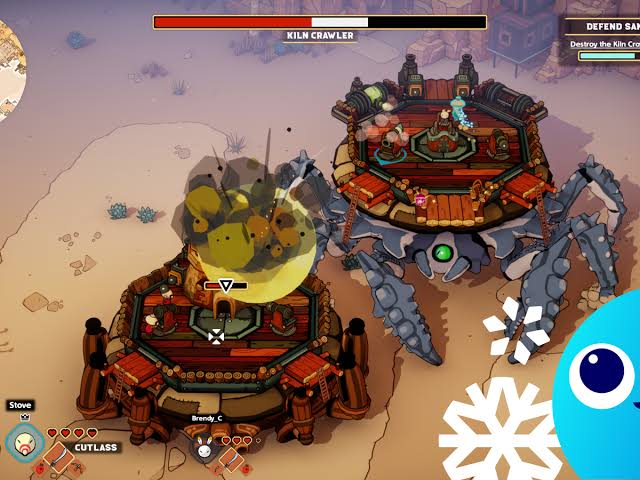
As DuneCrawl expanded its map trajectory past tens of thousands of distinct levels, maintaining mechanical freshness and structural variety presented a monumental game design dilemma. To prevent the core crawling loop from collapsing into visual and mechanical monotony, the development team continuously engineered dozens of specialized board hazards, interactive obstacles, and objective modifiers. These structural additions ranged from expanding Cactus Thorns, Hardened Sandstone Crates, and ticking Sinkholes to multi-layered Tar Pits, Desert Storm Tiles, Sticky Clay, and dynamic Sand Falls.
However, this ongoing mechanical expansion inevitably resulted in severe level design inflation and structural complexity bloat. Newer obstacle mechanics frequently lack the elegant clarity of foundational elements, instead introducing chaotic multi-layered interactions that compound the role of unmitigated randomness. Consequently, late-game stages often cease to resemble logical spatial puzzles altogether, morphing instead into high-chaos survival gauntlets where players are forced to clear dense layers of hazardous clutter until the backend server seed grants a clearable piece distribution. Skill ceases to be a meaningful metric when nineties percent of the board is physically locked behind multi-hit environmental hazards.
The progression of blocker mechanics over time can be categorized into three distinct tiers. Tier 1 hazards cover basic spatial obstacles such as Sandstone Crates, which require an adjacent match to break and block crawler movement across the grid, and Cactus Thorns, which physically immobilize underlying path tiles until cleared by an adjacent blast.
Tier 2 hazards introduce timed instafail threats like Sinkholes, which feature a numerical tick-down timer that causes immediate level failure if it reaches zero, and Tar Pits, which continuously pump fresh Tar tiles onto the board to obstruct pathways and force constant defensive plays.
Tier 3 hazards represent multi-layered compound obstructors. Multi-Layered Ancient Ruins require up to five consecutive adjacent detonations or special drill blasts on the exact same coordinate to erode completely. Sticky Clay and Heavy Boulders are gravity-resistant blockers that shift positions dynamically during cascades to absorb clearing blasts and shield lower board objectives. Desert Worm Guards require feeding specific tile matches before they can be displaced from target areas, adding complex secondary objective management to basic tile swapping.
Social Pressure and Energy Systems: The Monetization of Impatience
A central pillar of the game’s long-term operational framework is its rigid time-gated life and energy ecosystem. Players are capped at a maximum capacity of five distinct canteen lives, with each failed attempt consuming a single canteen unit that requires thirty minutes of real-world time to regenerate naturally. This artificial temporal gate serves two distinct strategic purposes: it prevents hardcore players from consuming new level content too rapidly without paying, and it acts as a primary operational lever for driving continuous social viral marketing, peer-to-peer friction, and direct monetization.
To bypass these enforced time delays without spending premium currency, players are incentivized to link their social media profiles, allowing them to send water canteen requests directly to their contact lists. This viral design mechanism effectively transforms the active player base into an organic marketing distribution force, recruiting new users and re-engaging lapsed players through peer-to-peer push notifications. Players who choose not to leverage their personal social circles are left with a stark binary choice: endure hours of passive temporal gating, or purchase immediate full life refills using premium Sun Gems, effectively placing an explicit monetary value on human time and impatience.
This social integration also establishes subtle competitive pressure through visible map progression markers. Seeing friends or family members advance past difficult desert zones triggers social comparison mechanisms, compelling players to keep pace. When stuck on a challenging bottleneck, the desire to avoid falling behind one's social cohort acts as a powerful catalyst for purchasing power-ups or move extensions, transforming social connection into an engine for monetized competition. The game subtly transforms personal leisure into a public performance of map progression.
UI Bloat and Feature Fatigue: The Modern DuneCrawl Ecosystem
In its original iteration, DuneCrawl featured a remarkably clean, linear desert map interface that clearly communicated level progression and high scores. As live-service retention strategies evolved over the subsequent decade, the studio layered dozens of secondary meta-systems, event tracks, and competitive leaderboards onto the core client interface. These additions included Weekly Nomad Contests, Oasis Pass seasonal reward tracks, Pyramid Sprint competitions, Dune Dash challenges, Sultan Championship tournaments, and timed operational events.
For modern players, launching the mobile application initiates an exhausting sequence of mandatory pop-up promotional banners, event notifications, limited-time bundle offers, and claimable reward chests before the main game map can even be accessed. While these meta-layers are intentionally implemented to maximize Daily Active User retention statistics and extend average session duration, they create substantial visual, cognitive, and interaction fatigue. The foundational puzzle experience is frequently buried beneath layers of aggressive monetization prompts, artificial urgency timers, and bloated secondary event trackers that fragment the user experience and overstimulate the player before a single tile is swapped.
Comparing the original launch era to the present ecosystem highlights a massive shift in design priorities. The primary interface focus moved from clean linear map progression and minimalist desert grids to multi-layered live-service meta-events, pop-ups, and retention loops. Monetization touchpoints evolved from basic extra canteens and simple path extensions into battle passes, multi-tier bundles, dynamic adjustment moves, and timed power-ups. Interface complexity expanded from minimalist single-map navigation to a saturated user interface with mandatory event pop-ups, chests, and banner ads. The difficulty standard shifted from a static skill floor with baseline mathematical random seeds to telemetry-driven difficulty adjustments based on spending habits. Social integration grew from optional friend map markers to aggressive viral life requests, leaderboards, team races, and social passes. Finally, session pacing transitioned from player-driven pacing bounded by simple life gates to continuous retention events like Sandstorm Rush and Oasis Dash that force long play sessions.
Dark Patterns and Cognitive Exploitation in Free-to-Play Architectures
Game design ethicists, behavioral scientists, and software user experience researchers frequently cite DuneCrawl as an industry case study in the deployment of dark patterns—user interface designs crafted to manipulate users into taking choices that conflict with their deliberate intentions. These patterns range from strategic button placements and visual hierarchy trickery to the deliberate omission of transaction confirmation dialogs that capitalize on fast-paced tapping behavior and cognitive fatigue.
For example, the post-level failure interface routinely renders the spend-currency button in a bright, inviting primary color positioned directly under the user's natural thumb zone, while the option to abandon the level and lose a canteen life is rendered as a dull, low-contrast button or a tiny close icon placed in an unobtrusive corner. Furthermore, the application frequently executes premium currency spends instantly without requiring secondary confirmation prompts. During fast-paced gameplay sessions, muscle memory and rapid touch inputs frequently result in accidental Sun Gem expenditures, draining a player's hard-earned or purchased currency reserves without explicit, deliberate consent.
Another prevalent dark pattern is the false sense of agency created during pre-level booster selection screens. Players are often presented with pre-selected premium drills prior to starting a difficult level, subtly nudging them to consume rare inventory items on runs that may still be mathematically doomed by backend seed generation. These design choices systematically erode player autonomy, treating the user interface not as a neutral control surface, but as a persuasive behavioral funnel designed to convert attention into transactional velocity.
Four key dark patterns are frequently identified within mobile puzzle architecture. Interface disguising subtly blends purchase buttons into operational UI elements so that continuing a game feels like a default, non-transactional action. Forced continuity of consumables automatically enables timed infinite-life boosters upon collection rather than storing them in an inventory, forcing the player to choose between immediate session lengthening or wasting a reward. Obfuscated currency conversion prices items in Sun Gems rather than fiat currency values to obscure the real-world monetary cost of repetitive move extensions. Confirm-shaming and friction placement adds confirmation steps when attempting to exit a level, while removing confirmation steps when spending premium currency.
Regulatory Scrutiny and the Ethics of Casual Mobile Gambling Mechanics
The behavioral engineering strategies popularized by DuneCrawl have attracted rigorous examination from global consumer protection agencies, public health experts, and legislative bodies. Because the title relies heavily on variable ratio reinforcement schedules—the exact neurological mechanism that underpins traditional slot machines and casino gaming—critics argue that it presents significant ethical hazards, particularly given its family-friendly branding and universal age ratings across digital app storefronts.
Although DuneCrawl does not offer direct cash payout mechanisms, the practice of charging fiat currency for randomized digital outcomes, such as daily fortune wheels, mystery desert chests, and algorithmically rigged board clears, blurs the boundaries between casual video entertainment and regulated gambling operations. Regulatory entities across North America and the European Union continue to evaluate whether hidden difficulty manipulation, pay-to-win micro-transactions, and predatory dark patterns demand strict regulatory frameworks, mandatory probability disclosures, public algorithm audits, or enforced age restrictions on free-to-play puzzle software.
This growing regulatory oversight has sparked intense debates within the broader interactive software industry regarding the definition of fair play in algorithmic environments. As legal frameworks evolve, developers may soon be compelled to provide players with complete transparency regarding whether a puzzle board's outcome was mathematically fair or algorithmically biased. Such transparency threatens to unmask the core illusion upon which the game's economic success was built, forcing a fundamental reckoning for the entire free-to-play mobile market.
The Future of Casual Gaming: Rebalancing Player Trust and Profitability
As the global mobile gaming landscape matures and consumer awareness regarding predatory monetization practices grows, the developers of DuneCrawl face a critical strategic turning point. The aggressive behavioral engineering tactics that generated record corporate revenue over the past decade are encountering rising friction from fatigued player demographics who increasingly demand transparency, fairness, and respect for their time and financial investment. The mobile industry is reaching a saturation point where engagement metrics can no longer be forced through psychological pressure alone without alienating long-term user bases.
To construct a sustainable future, casual game developers must rethink the social contract between players and software providers. True innovation in the desert traversal puzzle genre will require moving away from coercive algorithmic controls and returning to transparent, skill-respecting puzzle structures. By leveraging modern computing power to create genuinely adaptive, intelligent puzzle challenges rather than paywalled statistical traps, studios can build engagement models rooted in mutual respect, artistic integrity, and sustainable, ethical monetization.
A blueprint for a sustainable mobile ecosystem requires five key shifts. Purity modes and unbiased ladders should implement dedicated competitive modes where board seeds are completely randomized or standardized across all players, permanently disabling server-side difficulty manipulations. Transparent algorithmic disclosure should publish clear mathematical probabilities for path tile spawn rates, cascade mechanics, and booster drop rates to restore consumer trust in board integrity. User interface de-cluttering should provide customizable settings that allow players to suppress non-essential promotional pop-ups, meta-game events, and secondary sales pitches. Ethical microtransaction protections should integrate mandatory secondary purchase confirmations, daily spending caps, and automated alerts to safeguard vulnerable users from compulsive spending patterns. Deterministic puzzle mode options should introduce standalone level packages with fixed, handcrafted move solutions where victory is guaranteed through correct spatial execution rather than luck or purchases.
DuneCrawl stands as an undeniable landmark in modern behavioral engineering, brilliantly fusing accessible, delightful sand traversal mechanics with a masterclass in monetization strategy. By fundamentally shifting casual mobile gaming away from pure player skill toward algorithmically managed frustration and dopamine distribution, the studio unlocked unprecedented commercial value within digital software. However, as regulatory oversight tightens and player resistance to dark patterns intensifies, the long-term survival of the casual mobile market will depend on its willingness to abandon predatory manipulation in favor of sustainable, transparent, and player-centric design principles.